Because the symptoms of varicose veins are often dismissed as minor problems, many people develop a careless attitude, ignoring minor day-to-day symptoms without realizing they can escalate into major problems, such as chronic ulcers.
Here are seven facts about varicose veins that everyone should be aware of and seek treatment promptly for optimal results.
1) Varicose veins cannot be cured with topical medications or creams alone. Diagnosis requires a medical history, physical examination, and specialized vascular ultrasound (duplex ultrasound) to assess underlying causes, otherwise the condition may recur after treatment.
2) Varicose veins can occur anywhere on the body, but are most common in the legs. People with heavier weight are more likely to develop varicose veins, including pregnant women. While women are more likely to be treated, men typically seek medical attention due to more severe symptoms. Most male patients present with varicose veins that have already developed into worm-like forms or varicose ulcers.
3) Those who stand or sit for long periods of time each day are at higher risk for varicose veins. Examples include teachers, flight attendants, nurses, and even office workers who sit at a computer all day without changing their posture, as well as pregnant women. Increased blood volume can lead to blood vessel strain, coupled with hormonal changes.
4) Varicose veins can be prevented. Avoid standing or sitting for long periods of time, and exercise regularly to strengthen your muscles and improve circulation. Avoid being overweight or obese, and wear comfortable, loose-fitting clothing. Women should avoid wearing high heels for extended periods or frequently, and should rest their legs appropriately.
5) Warning signs of varicose veins include pain, tightness, heaviness, or soreness in the legs, as well as swelling in the lower legs. Seek medical attention immediately, without waiting for symptoms to worsen. Doctors typically don't treat varicose veins immediately. Instead, they first examine the blood clots in the deep veins, check the valves in the deep veins for signs of closure, and identify any damaged or malfunctioning areas for further treatment.
6) Varicose vein severity
From small spider veins to visible, twisted, swollen veins resembling worms, darkening of the skin, dryness, and hardening, until ulcers develop.
7) Current treatments depend on symptoms and severity.
Doctors will consider appropriate treatments, including:
For patients with mild symptoms, conservative treatment, including wearing special medical elastic stockings, is used.
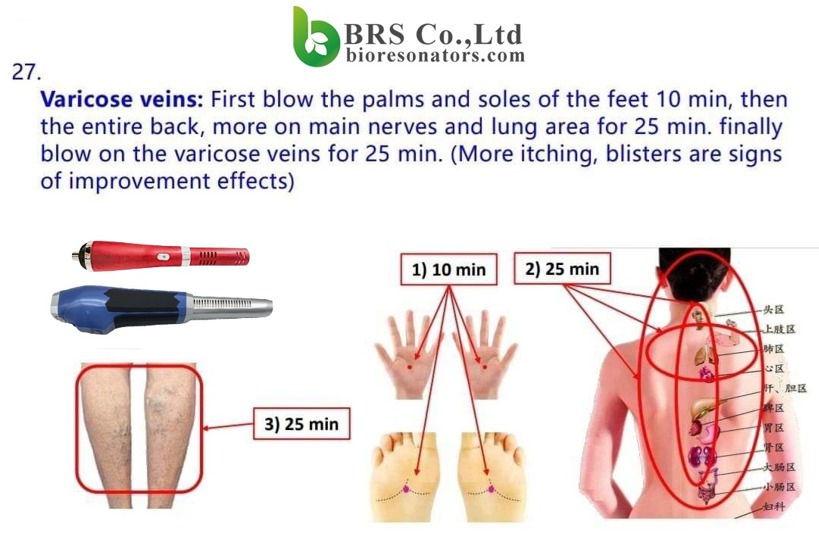
For patients with small varicose veins, terahertz wave therapy devices are used for radiation therapy.
Noticeable improvement is seen after 2-3 months.